
We had our friends from S&S Diesel Motorsport® in house at XDP to tackle one of the hottest topics in the Ford 6.7L Powerstroke world: the CP4 to DCR conversion kit. This kit has been out for a while, but there’s still some confusion, half-truths, and internet myths floating around. So, we went straight to Justin from S&S to set the record straight.
What Is the DCR Pump? CP4 vs. DCR Conversion Explained
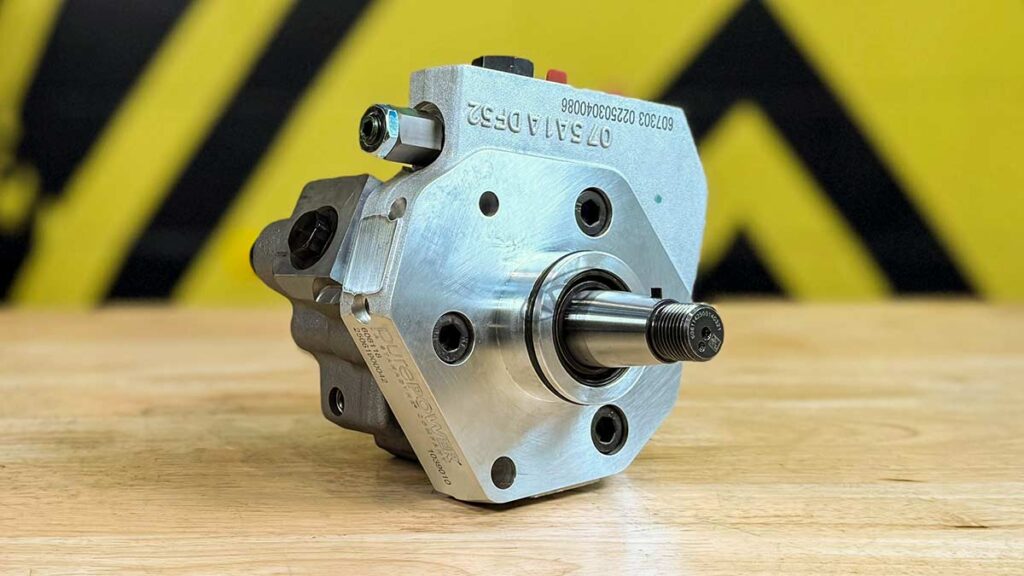
The DCR pump is made by Stanadyne and it stands for Diesel Common Rail. S&S Diesel teamed up with PurePower, which is the aftermarket division of Stanadyne, in the development of this kit. Functionally, the DCR takes a different approach than the CP4.
- CP4: Uses a two-lobe cam and two plungers in a V-shape, which means four pumping pulses per revolution.
- DCR: Uses an eccentric ring with two plungers and two pulses per revolution. The smooth, eccentric design delivers consistent performance.
The Takeaway: while the CP4 and DCR use very different designs, the DCR’s architecture is based on an eccentric-drive style that has already shown strong durability in the field.
As Justin explains at 0:28 in the video:
“…internally how it’s different than the CP4 is it’s an eccentric pump. So, it has an eccentric ring and two plungers… The CP4 has two plungers in a V configuration. And instead of an eccentric ring, it has an aggressive two-lobe cam. So, the CP4 will fire four times… whereas the DCR has two pumping pulses per revolution.”
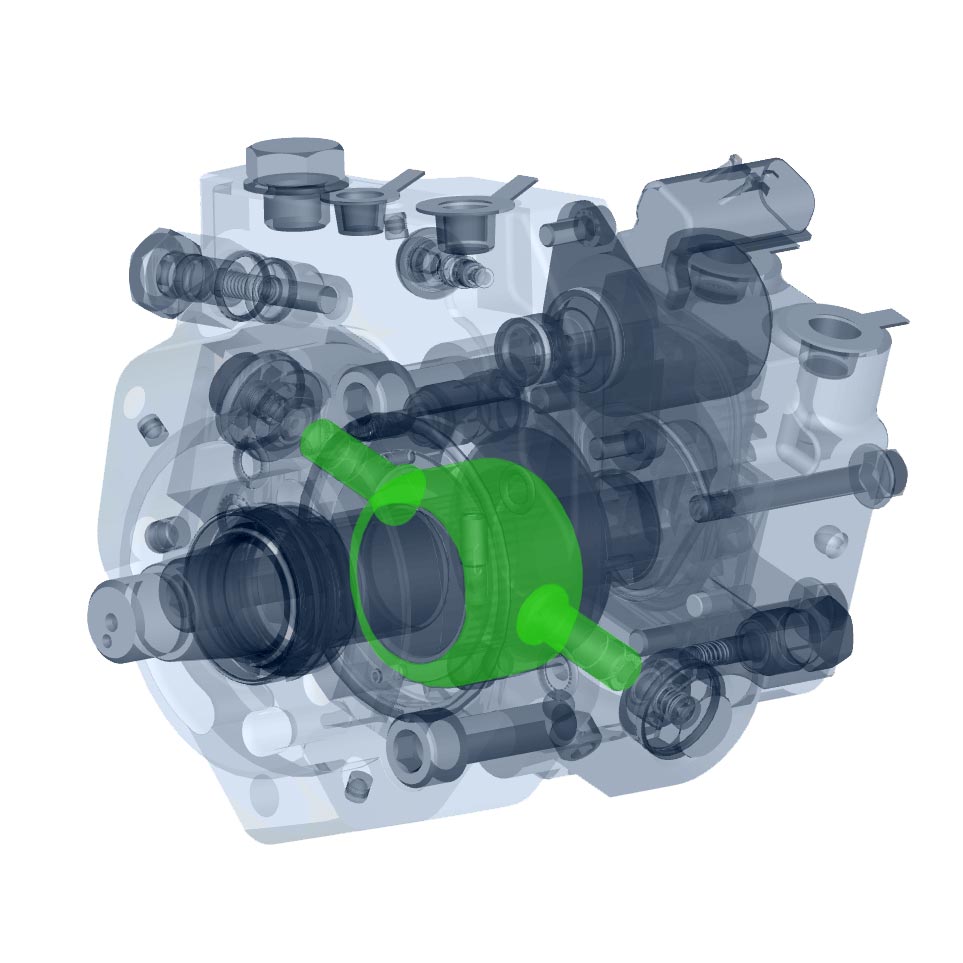
Why the DCR’s Eccentric Drive Makes It Durable
One of the biggest differences between the CP4 and the DCR is how they’re driven internally.
Instead of relying on a fast-spinning cam, the DCR has a floating eccentric ring with DLC-coated plungers that ride directly on it. The ring itself doesn’t spin – it just floats – which means smoother motion, less stress, and reduced wear. Eccentric drive technology is also used in the CP3, which has proven itself for more than 20 years in the field.
Put Simply: the DCR’s design avoids the metal-on-metal contact points that cause debris in CP4 failures, while leaning on a design that’s already proven to last hundreds of thousands of miles.
Justin explains at 1:30 in the video:
“…you have a shaft with an offset, and then you have a drive ring. And the ring just floats and you have DLC-coated plungers that ride directly on that ring. So the ring isn’t spinning, it’s just floating. And what’s nice is it allows for movement, just slow movements, not really fast spinning movements…eccentric pumps have been around for a long time…the CP3 is an eccentric…the DCR, which has been made by Stanadyne for over 20 years, has proven itself to be durable as well. Another feature of it (the DCR) is it has pressure-lubricated bushing as well.”
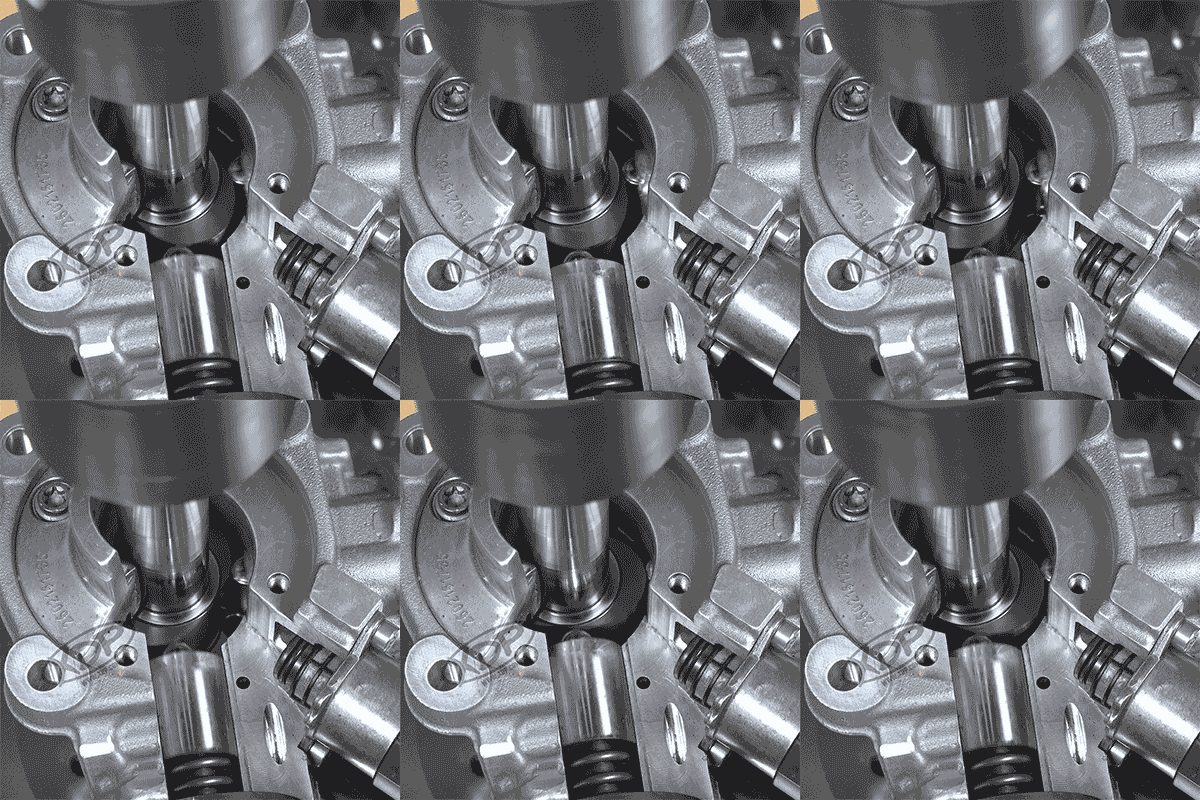
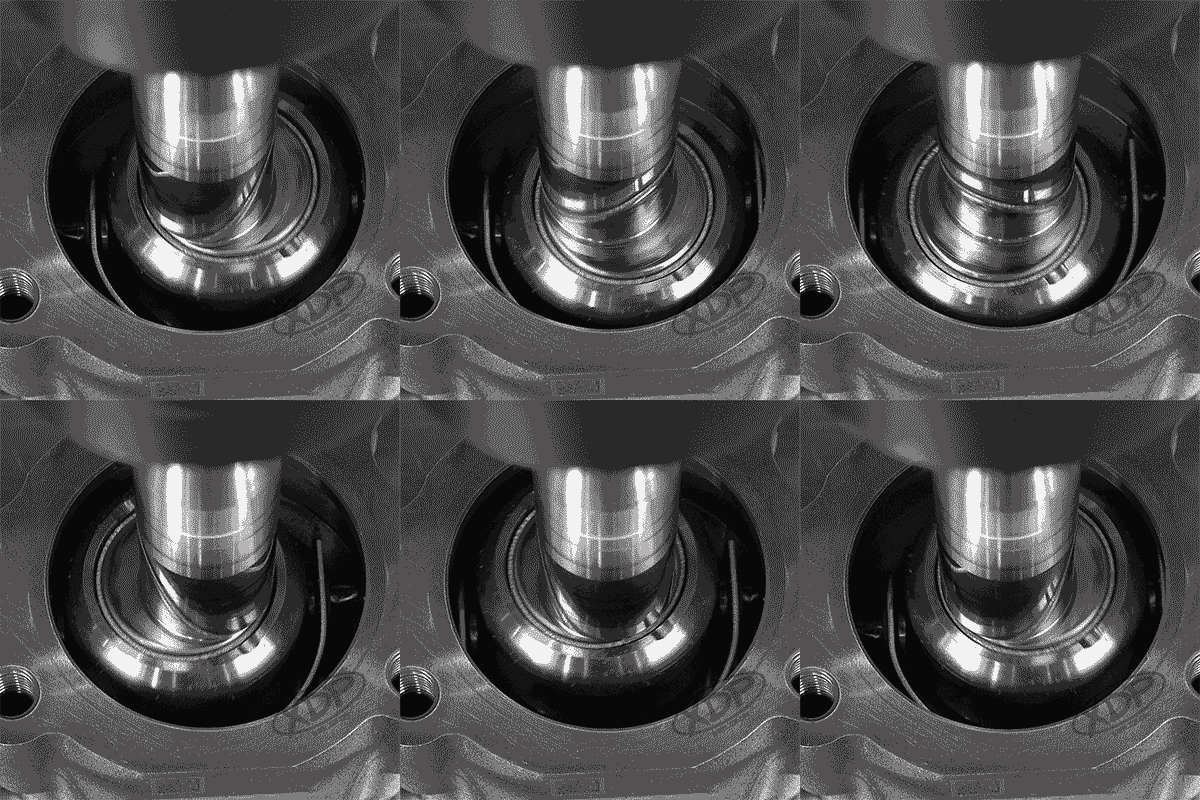
DCR Conversion Kit Updates and Improvements
S&S didn’t just drop the DCR Conversion Kit into the market and walk away – they’ve refined it as time has gone on.
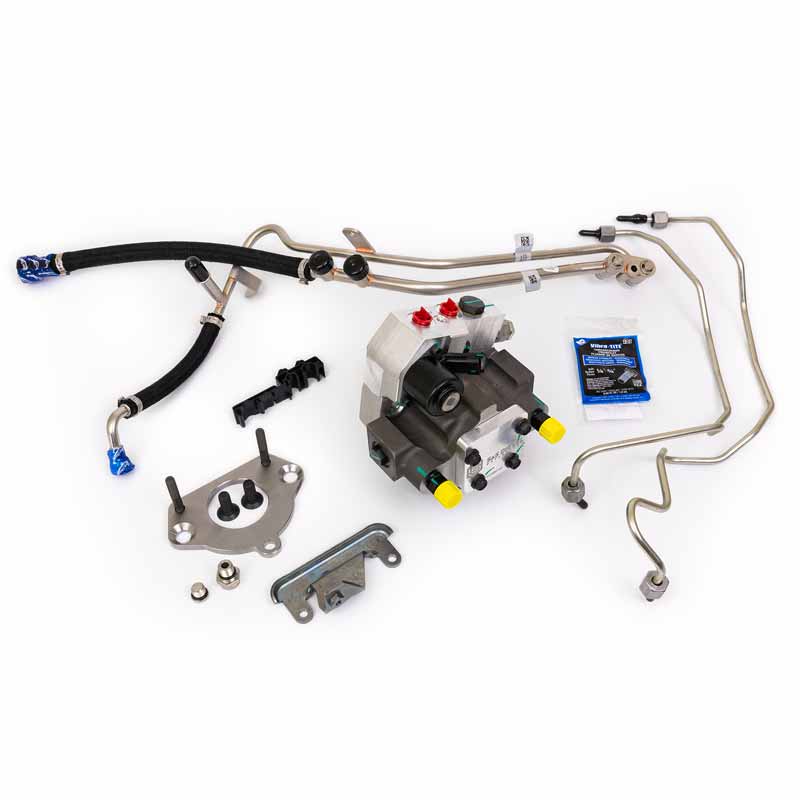
- Unified Fitment: Originally, S&S offered two different kits – 6.7F-DCR (2011-2019) and 6.7F-DCR-1 (2020-2022). They later modified the high-pressure lines so one part number could cover everything. Now the kit, 6.7F-DCR-1, fits 2011+ Powerstroke models.
- Roll Pin Timing Aid: The earlier pumps had no roll pin on the shaft so that the pump had to be clocked a certain way to time it properly. The added roll pin makes timing much easier and faster.
Timing the DCR Pump: Why it Matters for Your Powerstroke
No, skipping timing won’t damage your DCR. But it can lead to increased vibration, harmonics, and gear noise. S&S tested multiple clocking positions and landed on the one that reduces vibration and gear noise. Justin notes at 3:43 in the video:
“…we experimented with multiple clocking positions to find basically what we consider to be the optimal timing to reduce vibration and harmonics. That’s why we recommend timing the DCR. If it isn’t timed… the pump isn’t going to self-destruct. The main reason is to reduce the vibration and gear noise.”
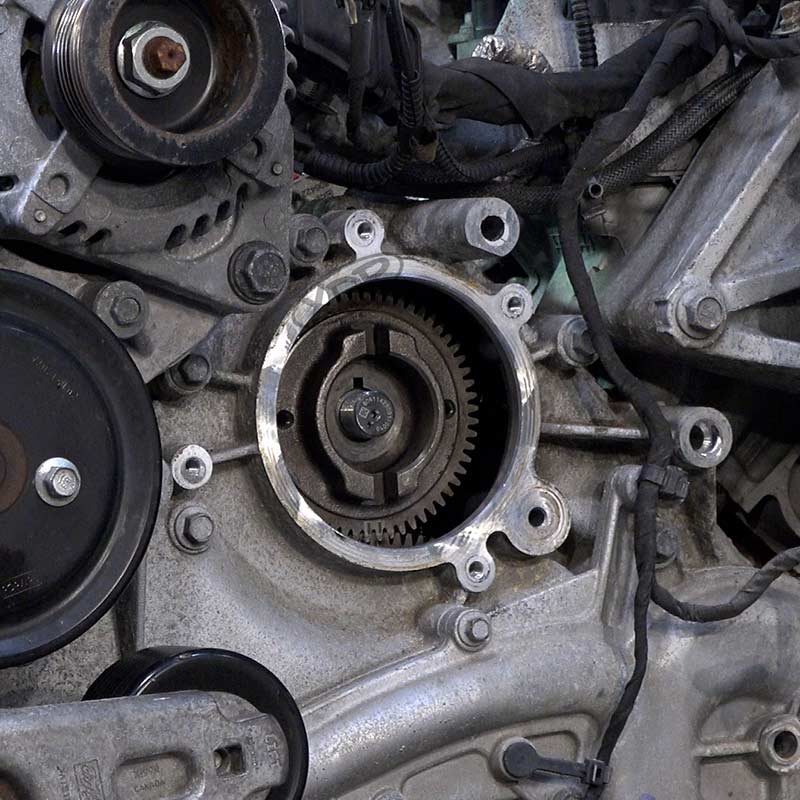
DCR Conversion Kit Installation: Common Mistakes to Avoid
The DCR itself is solid, and S&S Diesel backs it up with excellent support. Every reported issue gets logged, and they’ve found that most of the problems usually come from installation mistakes.
- Leaking Around Sensors: On certain model years, the plug and sensor adapter can get swapped. They’ll thread in but won’t seal, leading to leaks.
- Broken or Leaking Lines: Skipping the brackets and supports can cause vibration-related failures.
- Loose Pump Mounting: Improper torque or not using a thread locker where you should can cause the pump to shift and break lines.
Justin explains the common ones:
“…out of those 751 reported issues, I’d say the most common thing is lines leaking. The sensor, I believe it’s on the 15 to 19 trucks, you have to use a plug on one of the ports and then an adapter for the sensor on the other. And sometimes people with get those switched and while they can thread into each other, they’re not made to seal. And then they’ll see a leak.” (4:09)
“…broken lines, leaking lines, and that’s usually a result of the brackets not being installed. Make sure that you’re installing all of the saddle brackets on the high-pressure lines…if you don’t install that or the tail support, your lines will fail eventually.” (5:27)
“…not properly torquing the pump to the plate or not using (a thread locker) …sometimes the pump if it can work itself loose, then it will break high-pressure lines that way too.” (5:27)
If you’re dealing with a leak or broken line, S&S has an excellent technical support team ready to help. They log every reported issue, so they’ve built a huge knowledge base to troubleshoot from. In other words, if you run into a problem, chances are they’ve seen it before and can point you to the fix.
Justin explained:
“…we do a pretty good job of supporting the DCR. We’ve got a good team of technical sales representatives that are there to answer the phone and emails. So, we catalog every reported issue, whether it truly is an issue or an install error or customer issue. We record all of those.” (4:12)
DCR Pump Reliability vs. CP4 Failure Rates
When it comes to high-pressure fuel pumps, reliability is everything. A CP4 failure can take out the entire fuel system, while the DCR is designed to handle problems differently. The two pumps don’t just fail at different rates – if they do fail, they fail in fundamentally different ways.
Here’s the key differences:
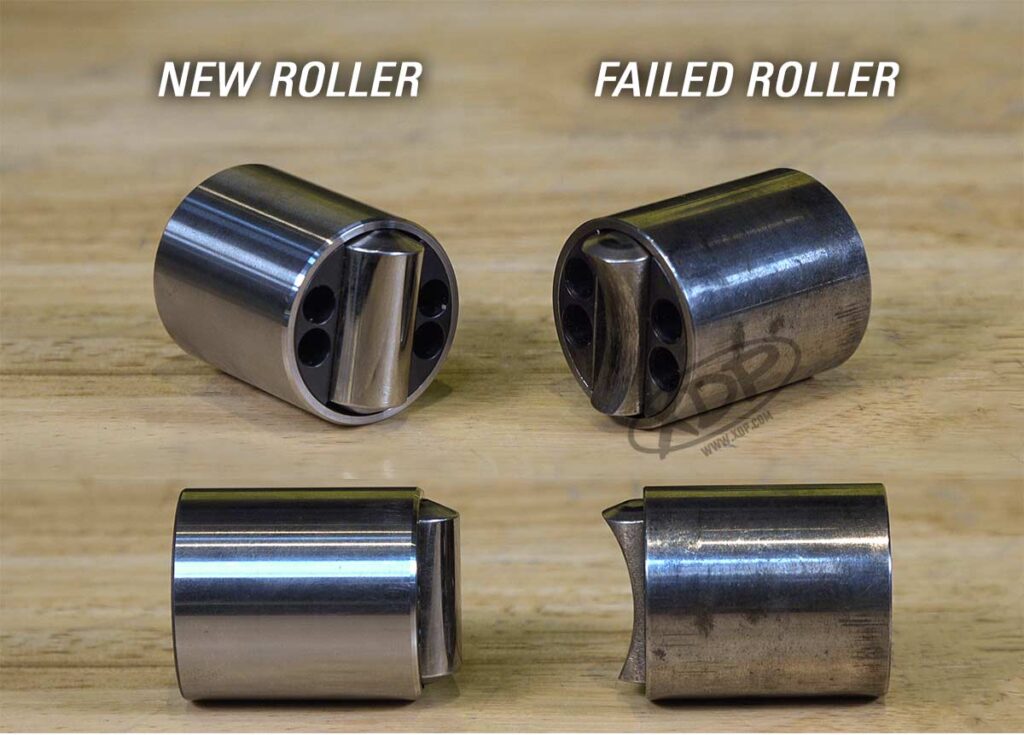
- CP4 Failure: The cam and rollers can create fine metal debris. Since the CP4 case feeds the pumping elements, the debris can travel into the fuel system.
- DCR Failure: Its design feeds the case and pumping elements separately. If there’s ever an issue, debris exits via the return line instead of moving into the injectors. The DCR also doesn’t generate the same type of fine metal debris.
With tens of thousands of DCRs in service, the warranty rate has been a fraction of a percent – well below the industry standard. Out of the few hundred reported “issues,” most weren’t pump failures at all, only end-user installation errors.
As Justin told us about the stats in the video at 6:02:
“The DCR has been on the market for roughly two years and we’ve been extremely happy with the warranty rate on it…47,000 have been sold to date. Out of that 47,000…we’ve had 751 reported issues… out of that… 75 true warranties. In terms of warranty rates, that puts us at a 0.16, a fraction of a percent in warranty rate. We’re extremely happy with that. That is well below industry standard.”
And if failure does happen, the DCR’s design changes how it plays out:
“…with the CP4, you have the hardened steel cam and rollers, and that’s what creates all that fine metal debris. It will seize up and just goes everywhere… The other issue with the CP4 is that you’re feeding the case first and then fuel from the case goes and feeds onto your high-pressure pumping elements. The DCR…the case and the high-pressure pumping elements are fed independently with fuel. So in the case if there is a failure, it’s going to go out the return. The other thing too is the design of the DCR, it doesn’t really make that fine metal debris.” (7:27)
Translation: the DCR has proven itself in the real world.
Does the DCR Pump Cause Crank Gear Issues?
Some Powerstroke owners worry that swapping to a DCR pump might spin the crank gear the ways CP4s sometimes do. According to S&S, that’s not actually a DCR problem, it’s a Ford engine design issue.
Here’s why: the crank gear on the 6.7L Power Stroke isn’t pinned, which means it has the potential to spin regardless of which fuel pump is installed, CP4 or DCR. When the engine is modified to command more fuel (through tuning, larger injectors, or other upgrades), that extra load can increase the chances of the gear spinning. But under stock calibration, the DCR delivers fuel just like the CP4, without adding stress beyond what the engine was designed to handle.
The takeaway is this: crank gear issues can happen, but it’s due to the engine’s design limits, not the pump itself.
Justin clarified this issue in the video at 9:19:
“…the crank gear spinning… that’s a Ford problem. That’s a problem with the Ford engine, not necessarily a fuel pump issue. But when you do put more load on that crank gear or more load on the shaft of the pump, then you are increasing your chances of it spinning.”
Common DCR Conversion Kit Trouble Codes
Sometimes you’ll see fuel pressure-related codes after a DCR Install:
- P0087 (Low Pressure)
- P0093 (Large Leak)
- P0088 (High Pressure)
- P228F (Fuel Pressure Control)
Justin notes:
“…the ones that we get reports of most often are fuel pressure codes. Like the P0087, that’s a low fuel pressure code. And then the P0093, that’s a large leak detected. And then you got a P0088, that’s a high-pressure. So all the codes that we get – and also the P228F, I believe, is also a fuel pressure-related code.” (10:15)
In most cases, the culprit is the pressure control valve (PCV) on the rail, not the pump:
“…a lot of times those can leak and you won’t even see it because the way it’s designed, the leak actually goes out of the return. So it could be leaking and you don’t even know it. A common fix to this is to just really tighten the heck out of it, like as hard as you can.” (11:15)
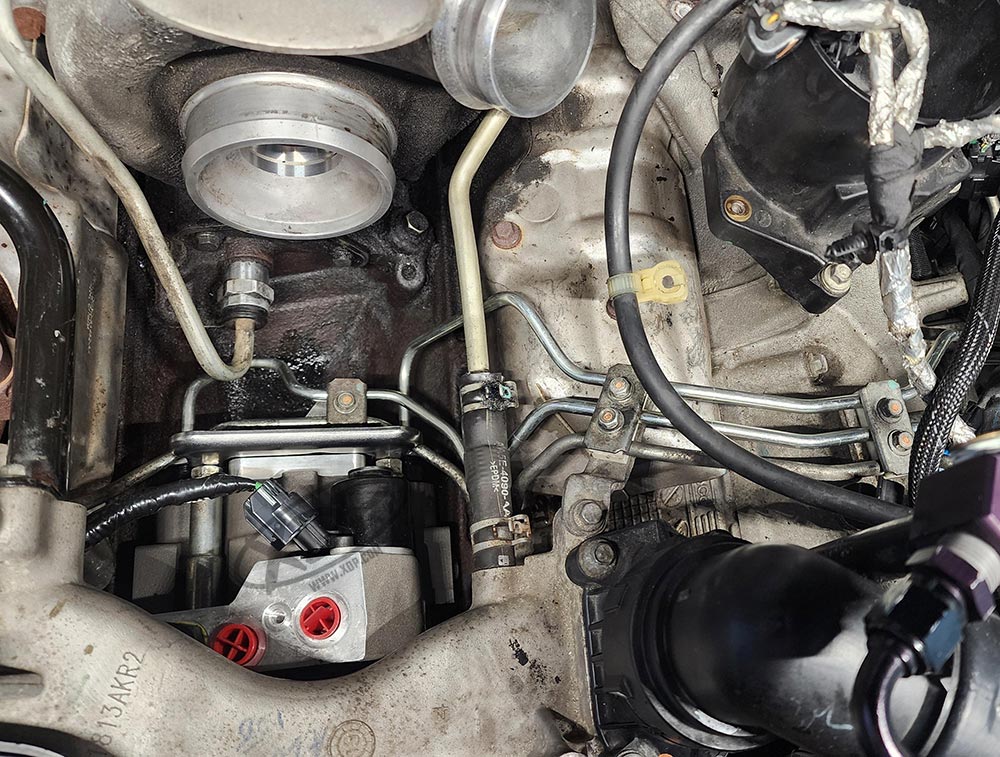
How to Identify a DCR Pump Conversion on Your 6.7L Powerstroke
If you’re looking under the hood of a truck, how would you know if it’s got a DCR conversion on it? No need to pull the manifold – just check the fuel lines. The DCR kit includes a low-pressure line assembly with a line that clips into the Stage 2 filter. Look for Gates® hose on that assembly. If you see it, you’ve probably got a DCR.
In the video, Justin talks about this at 14:43:
“…This is the low-pressure line assembly that we include with the DCR. Easy way to tell is it’s got this line here that clips into your Stage 2 supply filter…we use Gates hose on that. So if you see Gates on the hose, then chances are it’s got a DCR in it.”
Can a CP4 Bypass Kit Work with a DCR Pump?
Sort of. The bypass block from an S&S CP4 kit won’t fit a DCR (different metering valve), but if you’re running a return filter, you can leave it – it’s on the return side and while not needed with the DCR, it won’t hurt anything either.
“…our disaster prevention kit, at least the bypass block portion, will not fit on a DCR. It’s incompatible. It’s not going to hurt anything to run the return filter… you don’t really need it with the DCR, but it doesn’t hurt to leave it in there. The off chance that maybe the DCR does send some debris out of the return, or metal, then that filter would catch it.” (15:30)
Why Choose the CP4 to DCR Conversion Kit
The CP4 to DCR conversion kit takes one of the most talked about components in the 6.7L Powerstroke – the CP4 pump – and replaces it with a proven, eccentric-drive design that’s smooth, tough, and backed by real-world results.
The Final Word on the CP4 to DCR Conversion
The DCR conversion kit is the next step for Powerstroke reliability. By using a proven eccentric-drive design, adding modern durability features and backing it all with real-world testing, the DCR delivers both peace of mind and performance headroom.
Ready to make the move? XDP has the S&S Diesel DCR Conversion Kit so your Ford 6.7L Powerstroke will keep running strong for years to come.

Sources:
“S&S Diesel DCR Fuel Pump CP4 Conversion Kit Common Questions | XDP Q&A” YouTube, uploaded by XDP, August 27, 2025.