
Picture this: the trailer is hooked up, the bed is loaded with gear, and everyone’s in the cab ready to roll. The truck feels fine pulling out, but you start to wonder how close you are to the limits of what it was designed to handle. That question comes up often, especially for truck owners who tow or plan to tow. More often than not, the limiting factor isn’t the advertised towing number. It’s payload.
It’s also why we hear things like:
Can suspension upgrades help my truck handle a trailer better?
Do airbags or helper springs change my payload rating?
Payload capacity matters because it plays a big role in how a truck behaves under load. It affects stability, ride quality, braking, and how confident the truck feels when you’re hauling or towing.
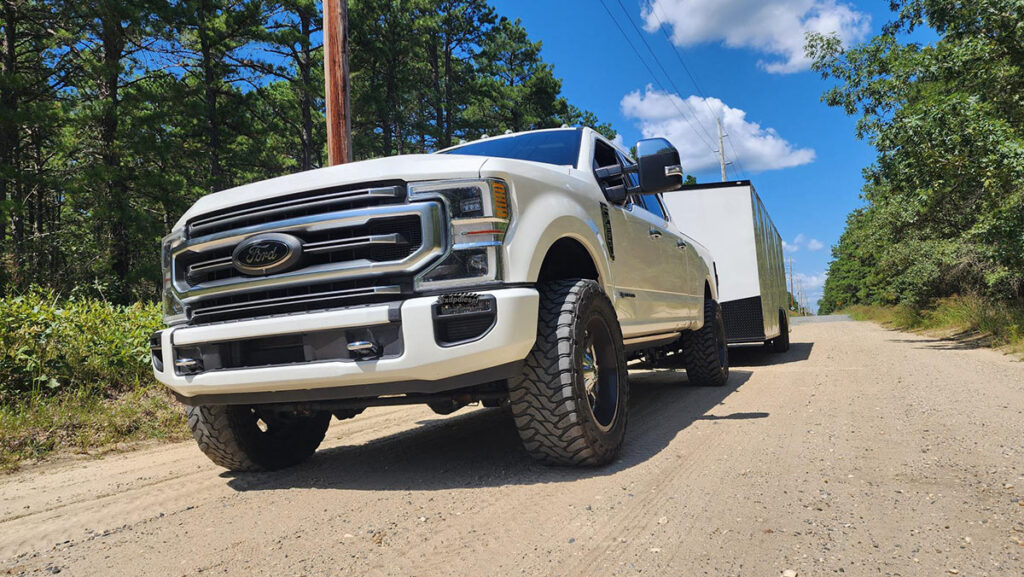
What is Payload Capacity?
Payload capacity is the maximum weight your truck can carry in the cab and bed. 2
That includes:
- Fuel
- Passengers
- Tools and cargo
- Aftermarket accessories
- Downward hitch or pin weight from a trailer
If it’s in or on the truck, it counts toward payload.
The Ford Motor Company easily describes payload in their RV and Trailer Towing Guide video 7:
“Payload is going to be anything you add to your vehicle: passengers, camping gear, any extra cargo. If you bring your dog along, he’s going to be a part of your payload.”
Manufacturers assign a Gross Vehicle Weight Rating (GVWR) to every truck. GVWR represents the maximum allowable weight of the fully loaded vehicle, including passengers and cargo. 1
According to the National Highway Traffic Safety Administration (NHTSA), Gross Vehicle Weight Rating (GVWR) is
“the value specified by the manufacturer as the loaded weight of a single vehicle.”
Payload Capacity vs. Towing Capacity (Why This Trips People Up)
Payload and towing capacity are related, but they’re not the same thing.
- Payload Capacity is how much weight the truck can carry in the cab and bed.
- Towing Capacity refers to the maximum trailer weight a truck is rated to tow.
An Important but Overlooked Detail
When you tow a trailer, some of that trailer’s weight presses down on the truck through the hitch. On conventional trailers, this is called tongue weight. On fifth-wheel or gooseneck trailers, it’s referred to as pin or kingpin weight. That tongue or pin weight counts toward payload.
According to the 2025 Ford Super Duty Pickup Towing Guide,
“conventional trailer tongue load weight should be 10% (15% for 5th-wheel and gooseneck towing) of total loaded trailer weight.” 9
According to definitions straight from Ford Motor Company,
“Payload is the combined weight of cargo, passengers, after-market accessories, plus the Tongue Weight if you are towing.” 1
This is why it’s possible to be under your towing capacity while still being over your payload capacity, especially with heavy trailers, full beds, and multiple passengers.
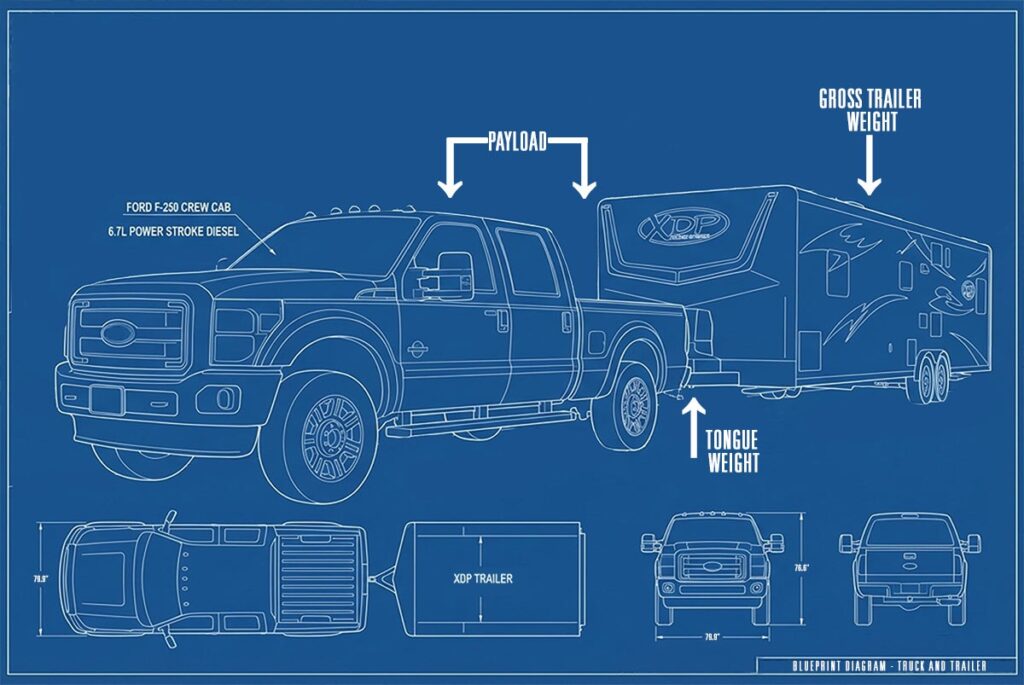
How Payload Capacity Is Calculated
The calculation itself is simple and federally recognized:
Payload Capacity = GVWR − Curb Weight 2
As defined by the NHTSA: “Curb weight means the weight of a motor vehicle with standard equipment; maximum capacity of engine fuel, oil, and coolant; and, if so equipped, air conditioning and additional weight of the optional engine.”2
Example
GVWR: 10,000 lbs
Curb Weight: 7,500 lbs.
10,000 − 7,500 = 2,500 lbs of payload capacity
That 2,500 lbs includes people, tools, bed cargo, accessories, and trailer tongue or pin weight. It adds up fast.
Every vehicle leaves the factory with manufacturer-assigned weight ratings that are certified to federal safety standards. In everyday driving, those numbers often go unnoticed, but they become far more important when you’re sizing up the right truck to haul a camper, trailer, or equipment.
Those ratings set the framework for safe operation. Within that framework, the right setup and supporting components can make towing and hauling feel noticeably smoother and more controlled.
Can Suspension Upgrades Increase Payload?
Suspension upgrades can absolutely improve how a truck handles weight, reducing sag, improving control, and helping the truck stay level. What they don’t do is change how much weight the truck was originally designed, rated, or certified to carry. 1
Suspension upgrades like airbags, helper springs, or heavy-duty shocks can help your truck handle weight better. They can reduce sag, improve stability, and make the ride feel more controlled. What they don’t do is increase your truck’s official payload rating.
That’s because payload limits aren’t based on suspension alone. They’re set by the combined limits of the:
- Frame
- Axles
- Brakes
- Tires and Wheels
- Drivetrain
While suspension upgrades can improve how a truck handles weight, the certified GVWR and payload rating are still based on the vehicle’s original design and components.
Planning Ahead: Making Towing Easier Now and Later
Whether you’re towing today or thinking about it down the road, payload capacity is worth understanding early. It influences not just what a truck can carry, but how it feels when loaded.
Real-world towing often involves more than just a trailer. Passengers, gear, trailer tongue or pin weight, and accessories all add up, and they all count toward payload. That’s why two trucks with similar towing ratings can feel very different once they’re actually hooked up and loaded.
Thinking ahead means looking at the whole picture:
- How the truck sits under load
- How stable it feels at highway speeds
- How predictable braking and handling feel
- How comfortable it is on longer drives
The goal isn’t to push limits; it’s to set up your truck so towing feels easier, more controlled, and less stressful, both now and as your needs change.
Why Payload Capacity Matters for All Trucks
Diesel trucks are built to work, but even the toughest platforms have limits.
Running overloaded can lead to:
- Reduced braking performance
- Poor handling and stability
- Accelerated tire, brake, and axle wear
- Increased stress on the frame and drivetrain
- Potential warranty or liability issues
Manufacturers design trucks to operate safely within their rated limits. Exceeding payload capacity can adversely affect handling and performance, increase wear on vehicle components, and compromise overall vehicle control. ¹
It’s also worth remembering that accessories like steel bumpers, auxiliary fuel tanks, toolboxes, ladder racks, and hitches all increase curb weight, quietly eating into available payload before you even load cargo or passengers.
How to Check Your Truck’s Payload Capacity
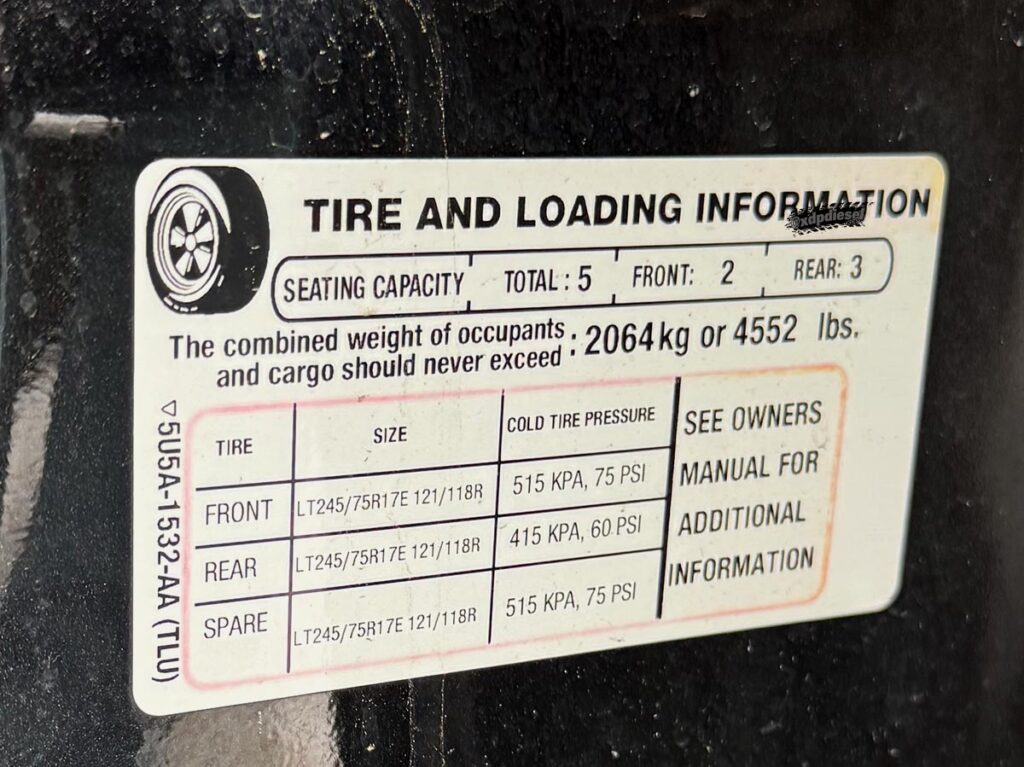
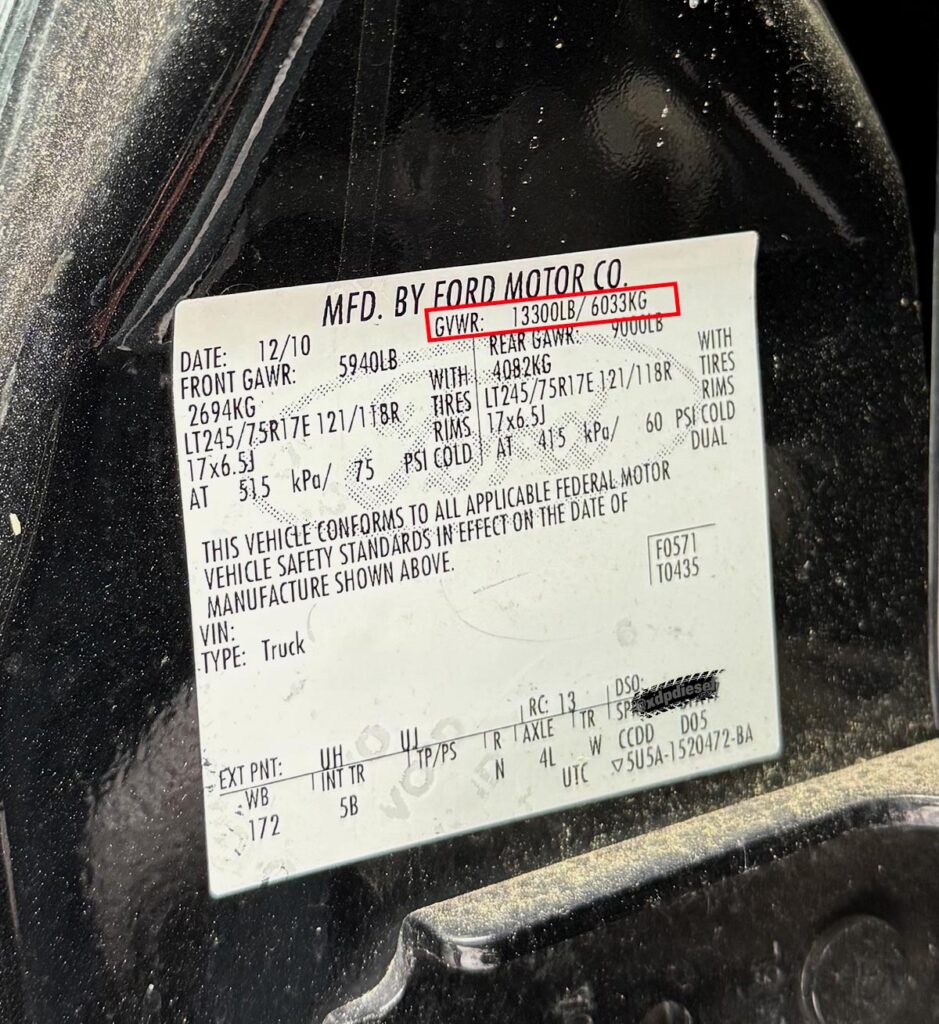
The most accurate place to find your truck’s payload information is the Tire and Loading Information label inside the driver’s door jamb.
This label typically lists:
- GVWR
- Front and rear axle ratings (GAWR or Gross Axle Weight Rating)
- Factory tire size and load rating
Many newer trucks also list payload capacity directly. If it doesn’t, you can calculate it using GVWR minus curb weight for your exact configuration. Curb weight can be found in the owner’s manual.
Manufacturers consistently recommend relying on this label, not generic online specs, because it reflects how your truck was built at the factory. 1
Common Payload Ratings (What to Know Before Comparing Trucks)
Payload capacity varies widely based on cab configuration, drivetrain, engine choice, axle ratio, and optional equipment. Because of this, manufacturers don’t publish a single payload number per model.
For general reference:
- Ford Super Duty: Payload ratings vary by configuration, with some properly equipped F-350 models offering up to approximately 8,000 lbs of payload. 4
- Ram Heavy Duty: The 2026 Ram 2500 max payload can reach into the 3,900+ lb range, and the 2026 Ram 3500 can reach up to 7,590 lbs of payload when properly equipped. 5
- GM HD trucks: 2025 Silverado 2500HD payload capacities range across various configurations with numbers in the 3,400–4,000 lb range, and 3500HD configurations can exceed 7,200 lbs payload in some setups. 6
The takeaway: always check the door label. Even small option changes can alter payload by hundreds of pounds.
For example, according to the official 2026 Ford Super Duty towing guide, a Super Duty equipped with the 6.8L gas V8 can achieve a maximum payload of up to 8,000 lbs, while similar models with different powertrains (like the standard or high-output 6.7L Power Stroke diesel) show payload figures closer to 6,900 lbs. This illustrates that even within the same truck family, engine choice and equipment can affect how much weight the truck can carry.
Yes, You Read That Right
Because engine choice and equipment weight factor into payload, some gas-powered Super Duty configurations actually show higher payload ratings than their diesel counterparts. On paper, that means a gas truck can sometimes carry more weight in the bed than a diesel.
We’ll admit that’s not what you expect when you’re talking about heavy-duty trucks.
But here’s the part that won’t surprise anyone who’s spent time behind the wheel of a Power Stroke. While the diesel may give up some payload due to its heavier engine and components, it more than makes up for it with significantly higher towing capability. Thanks to the torque and driveline strength of the 6.7L Power Stroke, diesel Super Duty trucks are still the go-to choice when pulling heavy trailers.
It’s a trade-off that makes sense once you see the whole picture, and why understanding both payload and towing ratings matters.
Can You Increase Payload Capacity?
A truck’s factory GVWR and certified payload rating are set by the manufacturer and don’t change as a result of bolt-on upgrades.
That said, upgrades like:
- Helper Springs
- Air Bag Suspension Kits
- Upgraded Shocks
- Weight Distribution Hitches
These can make a noticeable difference in how a truck manages weight. These components help improve stability, reduce sag, and maintain ride height when operating within the truck’s rated limits. When used correctly, they can also help reduce issues like porpoising (where the truck and trailer bounce over uneven roads) supporting better control, comfort, and long-term reliability while hauling or towing.
Thinking Ahead? What Payload Means When Shopping for a Truck
If you’re shopping for a diesel truck, especially with plans to tow a camper, RV, or trailer down the road, understanding payload capacity early can save frustration later.
It’s easy to focus on advertised towing numbers, but payload often becomes the limiting factor once you account for passengers, trailer tongue or pin weight, bed cargo, and accessories. Two trucks with similar towing ratings can have very different real-world capabilities depending on cab style, drivetrain, axle configuration, and options.
Here’s what to consider when planning ahead:
- Cab and Bed Configuration: Crew cabs and luxury trims add weight, which reduces available payload.
- Single Rear Wheel vs. Dual Rear Wheel: Dually trucks typically offer significantly higher payload ratings.
- Intended Trailer Type: Fifth-wheel and gooseneck trailers place more weight directly on the truck.
- Future Accessories: Toolboxes, auxiliary fuel tanks, bumpers, and hitches all count toward payload.
Choosing a truck with extra payload capacity upfront gives you more flexibility later, whether you’re upgrading trailers, adding gear, or traveling with more passengers. Even with the right truck, properly managing payload and trailer tongue or pin weight is what makes towing feel confident and controlled in the real world.

Managing Payload
Understanding payload capacity is the first step. Managing it correctly is what keeps your truck handling the way it should. While you can’t increase your truck’s rated payload, the right components can help you set up your load properly, reduce guesswork, and maintain stability, especially when towing or hauling heavy gear.
That includes things like:
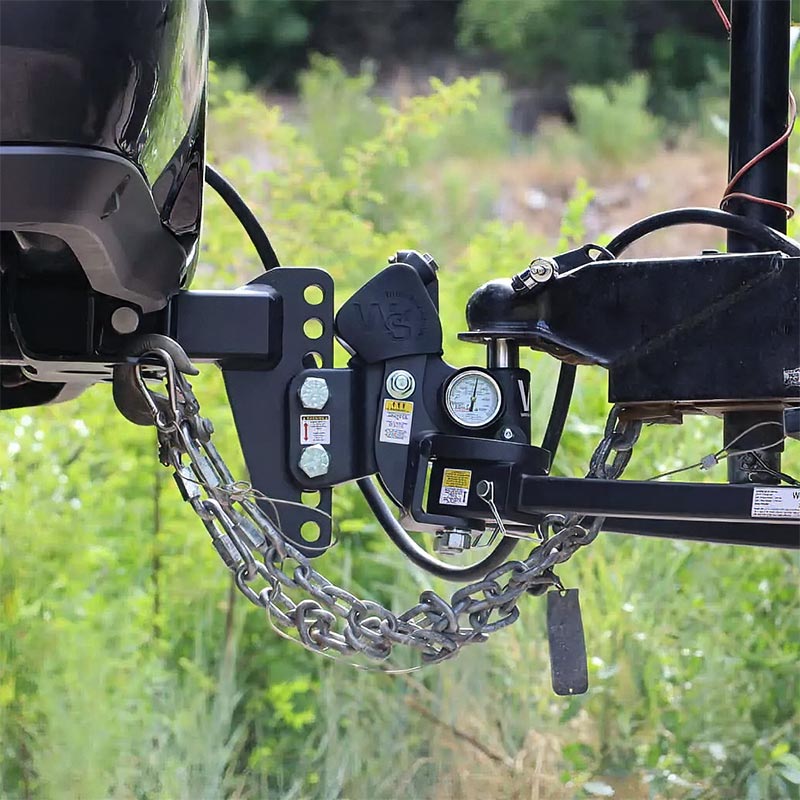
- Weight-rated, adjustable, and scale-equipped trailer hitches that help keep trailers level and verify real-world tongue weight
- Helper springs to support rear suspension under load
- Air bag helper spring kits to fine-tune ride height and stability when hauling
- Bump stops and load support components that help control movement at the limits
Whether you’re towing a trailer or loading up for the job site, properly rated load-management components help you stay within your truck’s designed capabilities while improving control and confidence.
Final Thoughts
Payload capacity isn’t just a number on a sticker; it’s a guideline that keeps your truck working safely and reliably. Every pound in the cab, bed, or on the hitch affects how the truck handles, stops, and responds on the road.
Understanding payload helps you make smarter decisions about loading, towing, and upgrades. While factory ratings don’t change, the right load-management components can significantly improve ride quality, stability, and overall confidence when hauling or towing within those limits.
Whether you’re pulling a trailer for work, recreation, or thinking of future plans, setting your truck up properly makes a noticeable difference. Manage the load, support the suspension, and your truck will feel more comfortable and capable every mile of the way.

Sources:
1. Ford Motor Company: Towing Dictionary (Payload Capacity & GVWR Definitions)
https://www.ford.com/support/towing-dictionary/
2. National Highway Traffic Safety Administration (NHTSA): 49 CFR §571.3 (Definitions of GVWR and vehicle weight terms)
https://www.ecfr.gov/current/title-49/subtitle-B/chapter-V/part-571/subpart-A/section-571.3
3. Ford Motor Company “What Is the Towing Capacity of My Vehicle?”
https://www.ford.com/support/how-tos/search/towing-capacity/
4. Ford Super Duty Payload Specifications
https://www.ford.com/trucks/super-duty/specs/
5. Ram Heavy Duty Capability (Payload by Configuration)
https://www.ramtrucks.com/ram-2500/capability.html