
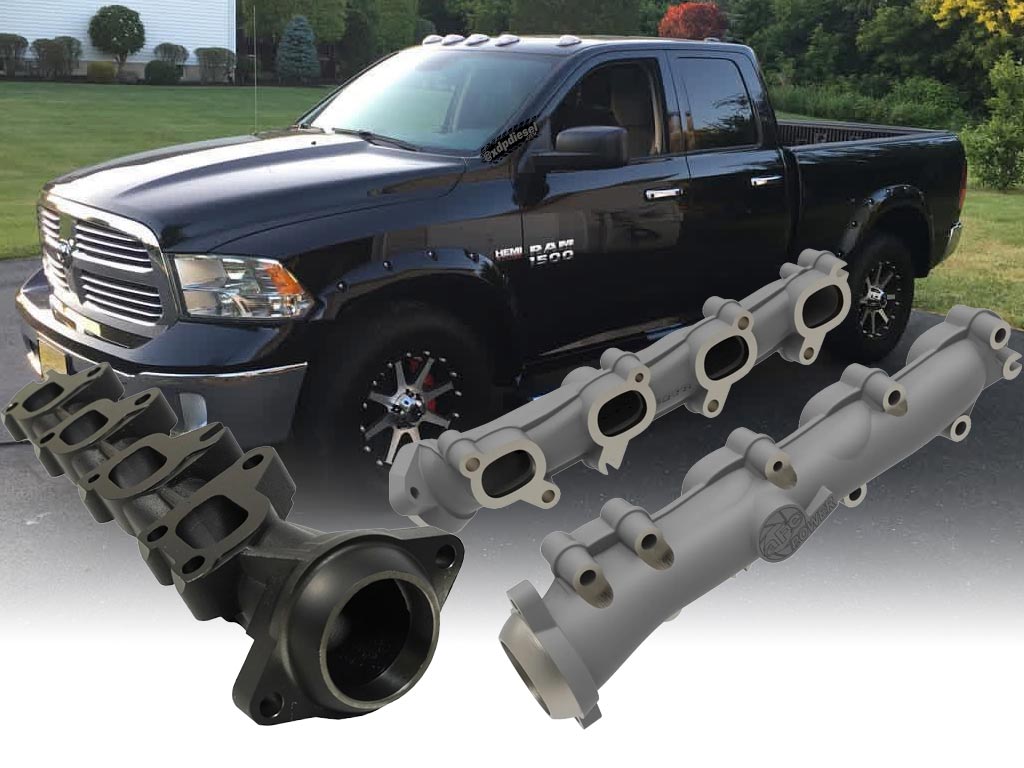
If you’ve searched “HEMI Tick” online, you’ve probably discovered there are about as many opinions as there are Ram owners.
Some people will tell you it’s completely normal. Others will insist it’s a sign your engine is one startup away from catastrophic failure. Then there are the internet experts who somehow diagnose every ticking noise through a 15-second video recorded from three parking spaces away.
The first and generally less serious is an exhaust manifold leak, often caused by broken manifold bolts or a warped or cracked manifold. This type of tick is usually loudest during a cold start and may become quieter as the engine warms up.
The second is a lifter-related tick. While far less common, this type of noise originates inside the engine and can require significantly more extensive repairs.
Unfortunately, both issues get lumped together as the “HEMI tick,” which is why you’ll often find conflicting information.
At XDP, diesel trucks are our specialty, but we’re truck enthusiasts first. We also know plenty of diesel owners have a gas-powered vehicle in the family. So, while the HEMI may be outside of our usual diesel territory, the infamous HEMI tick still hits close to home for many of our customers.
We’ll focus primarily on the exhaust manifold leak, the most common cause of startup ticking noises and the issue most often repaired with an upgraded exhaust manifold.
What Is The HEMI Tick?
The HEMI tick is a ticking or tapping noise that can occur in vehicles equipped with a HEMI engine. Owners commonly describe it as:
- A Metallic Ticking Noise
- A Tapping Sound During Startup
- A Sewing-Machine-Like Sound
- A Tick That Changes As The Engine Warms Up
One reason the HEMI tick creates so much confusion is that multiple issues can produce similar sounds.
Possible causes can include:
- Normal Fuel Injector Noise
- Exhaust Manifold Leaks
- Broken Exhaust Manifold Bolts
- Damaged Exhaust Manifold Gaskets
- Valvetrain Issues
- Lifter-Related Concerns
Because several conditions can create a similar ticking noise, proper diagnosis is essential before beginning repairs.
Why Does My HEMI Tick When Cold?
One of the most common owner complaints is a HEMI tick when cold. If the noise is loudest immediately after startup and fades as the engine warms, an exhaust manifold leak should be one of the first things inspected.1
Exhaust manifolds experience constant heating and cooling cycles throughout the life of the vehicle. Every time the engine heats up and cools down, the manifold expands and contracts. Over time, these repeated temperature changes can place stress on the manifold, gasket surfaces, and mounting hardware.
This can contribute to:
- Broken Exhaust Manifold Bolts
- Warped Or Cracked Exhaust Manifolds
- Damaged Gaskets
- Exhaust Leaks At The Cylinder Head
When the engine is cold, small gaps may allow exhaust gases to escape. As temperatures increase, the manifold expands and those gaps can become smaller, reducing the noise.
A cold-start tick does not automatically mean the engine needs major repairs, but it should be inspected before the noise gets worse.
Why Do HEMI Exhaust Manifold Bolts Break?
Ask enough HEMI owners about the tick and eventually someone will mention broken manifold bolts. The exhaust manifold is exposed to extreme temperatures every time the engine runs. As the manifold repeatedly expands and contracts, stress is placed on the mounting hardware.
Over time, this can contribute to bolt fatigue and failure. When a bolt breaks, the clamping force holding the manifold against the cylinder head is reduced. This can allow exhaust gases to escape and create the ticking sound many owners associate with the HEMI tick.
In some cases, the ticking noise is the first indication that a bolt has failed. Unfortunately, extracting broken exhaust manifold bolts is often the part of the repair that tests both patience and vocabulary.
Exhaust Manifold Tick Vs. Lifter Tick: What’s The Difference?
One of the biggest concerns among HEMI owners is determining whether the noise is coming from an exhaust leak or an internal engine component.
While both conditions can produce a ticking sound, there are some key differences.
Signs of an Exhaust Manifold Leak
- Most Noticeable During Cold Starts
- Often Becomes Quieter As The Engine Warms
- Sound Is Typically Heard Near The Side Of The Engine
- Black Soot May Be Visible Around The Manifold
- Broken Manifold Bolts May Be Present
Signs of a Lifter-Related Issue
- Noise May Remain After Reaching Operating Temperature
- Sound originates from inside the engine
- Noise May Worsen Over Time
- Performance Concerns May Be Present
- Internal Engine Repairs May Be Required
Depending on who you ask online, the HEMI tick is either a lifter problem or an exhaust leak. Fortunately, engines don’t spend much time reading internet forums. Before convincing yourself the engine needs extensive repairs, spend a few minutes identifying where the noise is actually coming from.
How To Confirm A HEMI Exhaust Manifold Leak
If you suspect an exhaust leak is causing your HEMI ticking noise, don’t start ordering parts just yet. A little diagnosis can save you time and money, and the frustration of replacing components that weren’t the problem in the first place.
- Start the Engine Cold – Many exhaust leaks are most noticeable immediately after startup.
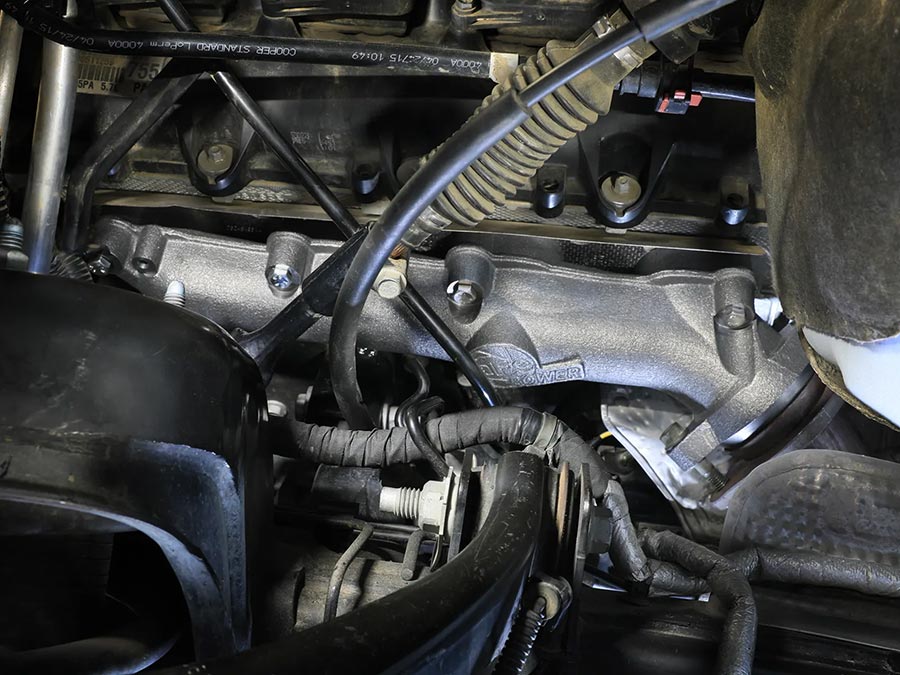
- Listen Near the Wheel Well – Exhaust manifold leaks are often easier to hear from outside the vehicle than from inside.
- Inspect for Black Soot – Look around the manifold and cylinder head for signs of escaping exhaust gases.
- Check the Manifold Hardware – Inspect for broken, missing, or damaged exhaust manifold bolts.
- Monitor Changes as the Engine Warms – If the ticking noise decreases significantly as temperatures rise, an exhaust manifold leak is a strong possibility.
- Use a Smoke Tester – A smoke tester fills the exhaust system with low-pressure smoke while the engine is off. Wherever smoke escapes, you’ve likely found your leak. It’s a quick and effective way to locate leaks that may be difficult to see or hear during a visual inspection.
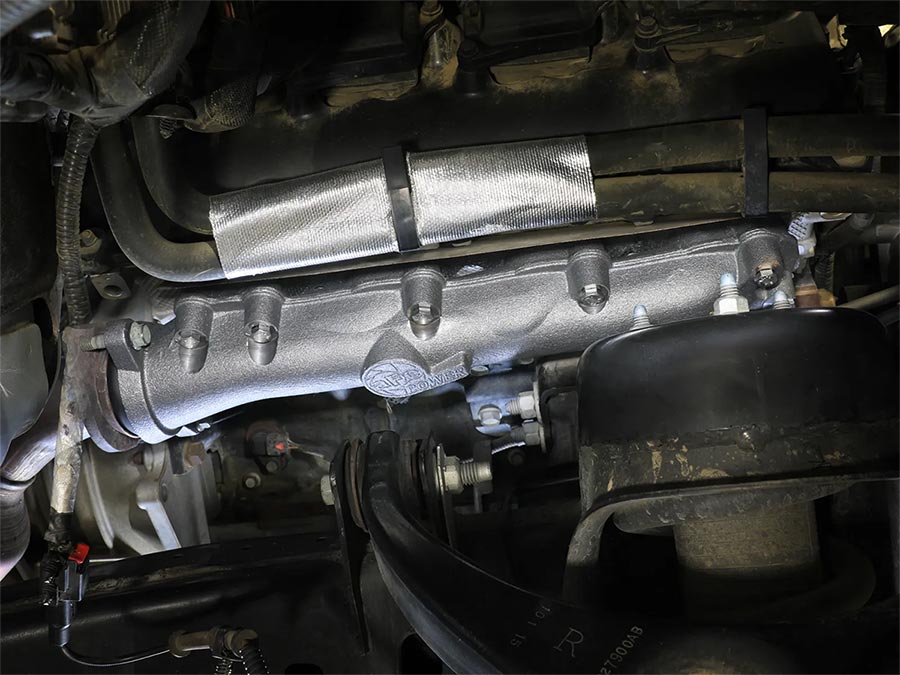
How Do You Fix a HEMI Tick Caused by An Exhaust Manifold Leak?
If an exhaust manifold leak is responsible, repairs commonly include:
Replace Broken Exhaust Manifold Bolts – Failed hardware should be removed and replaced to restore proper clamping force.
Install New Gaskets – A damaged gasket can allow exhaust gases to escape and create ticking noises.
Swap Out a Warped or Cracked Exhaust Manifold – If the manifold no longer seals correctly, replacement may be necessary.
Upgrade Hardware During Repairs – Many owners choose upgraded fasteners when performing repairs to improve long-term durability.
Addressing the issue early can often prevent additional complications and help keep repair costs under control.
Is There a Better Replacement Than the Factory Exhaust Manifold?
Once you’ve confirmed your HEMI tick is caused by an exhaust manifold leak, the next question becomes whether you should simply replace the factory parts or upgrade them.
Many owners choose to install another OEM manifold, but that doesn’t necessarily address the issues that caused the failure in the first place. Repeated heat cycles can continue to stress the manifold and mounting hardware, which is why many HEMI owners look for upgraded replacement components designed with durability in mind.
Upgraded Exhaust Manifolds
BD Diesel offers upgraded exhaust manifolds for a range of 5.7L HEMI-powered Ram, Dodge, and Jeep vehicles, including select Ram 1500, Dodge Durango, Jeep Grand Cherokee, and Jeep Grand Wagoneer applications.
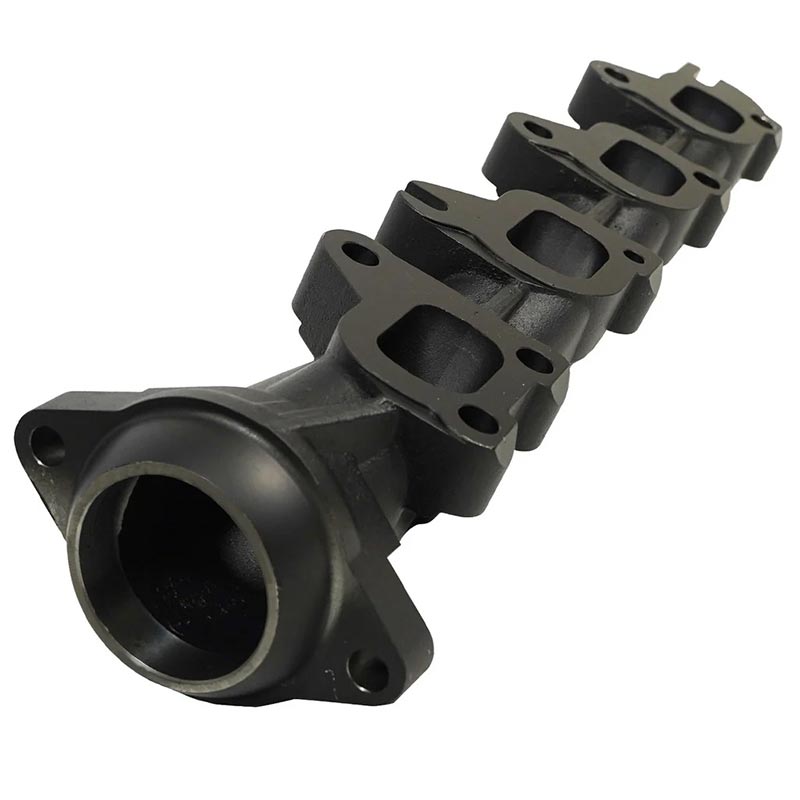
BD Diesel HEMI Exhaust Manifolds
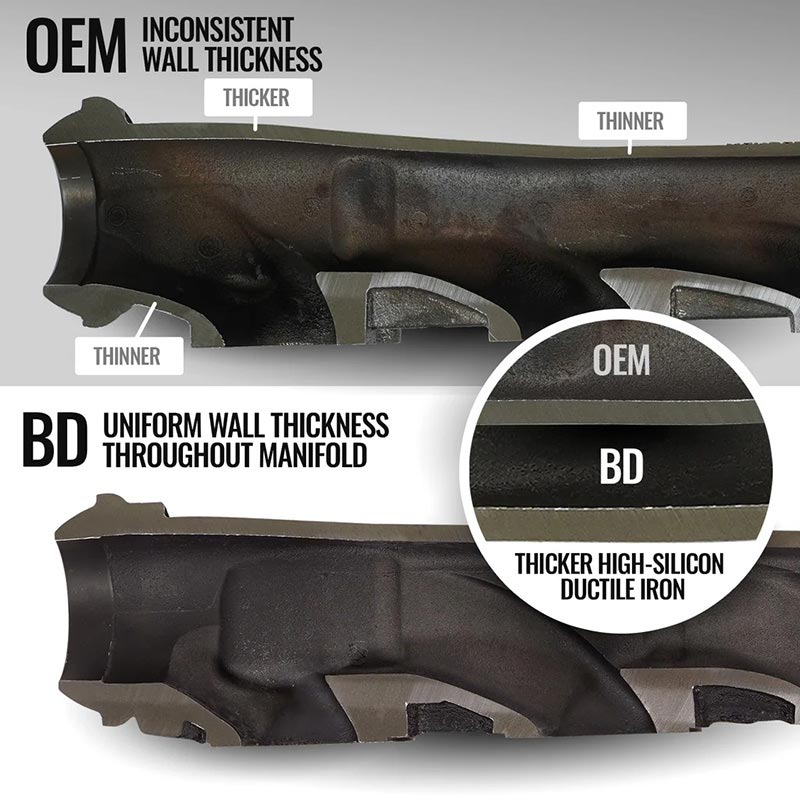
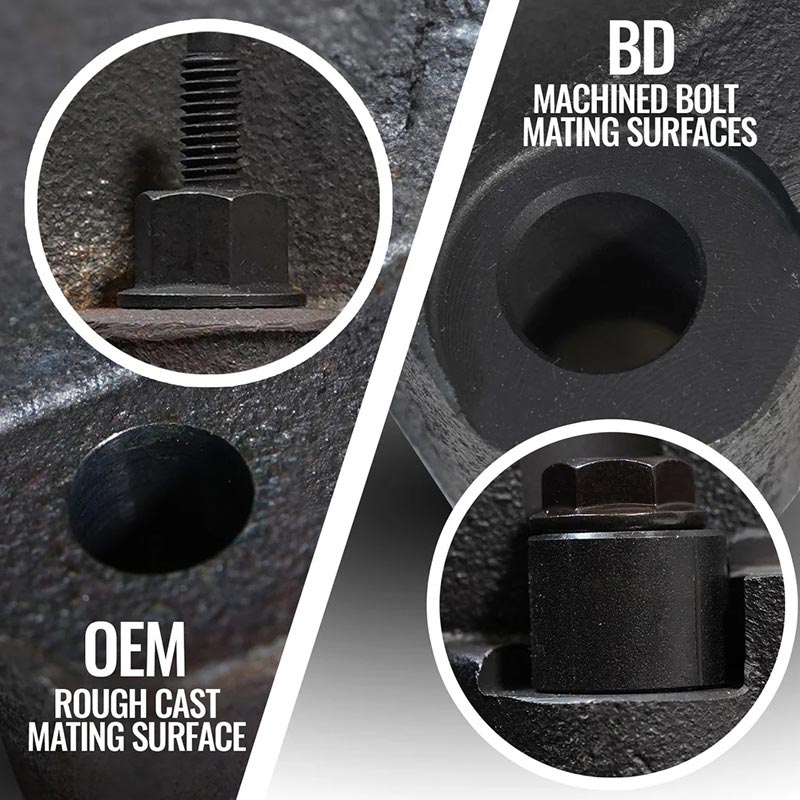
The BD manifolds are constructed from high-silicon ductile iron and use longer fasteners with spacers designed to better accommodate thermal expansion. Depending on the application, the manifolds also feature independent heat shield mounting locations that separate the heat shield from the manifold mounting hardware.
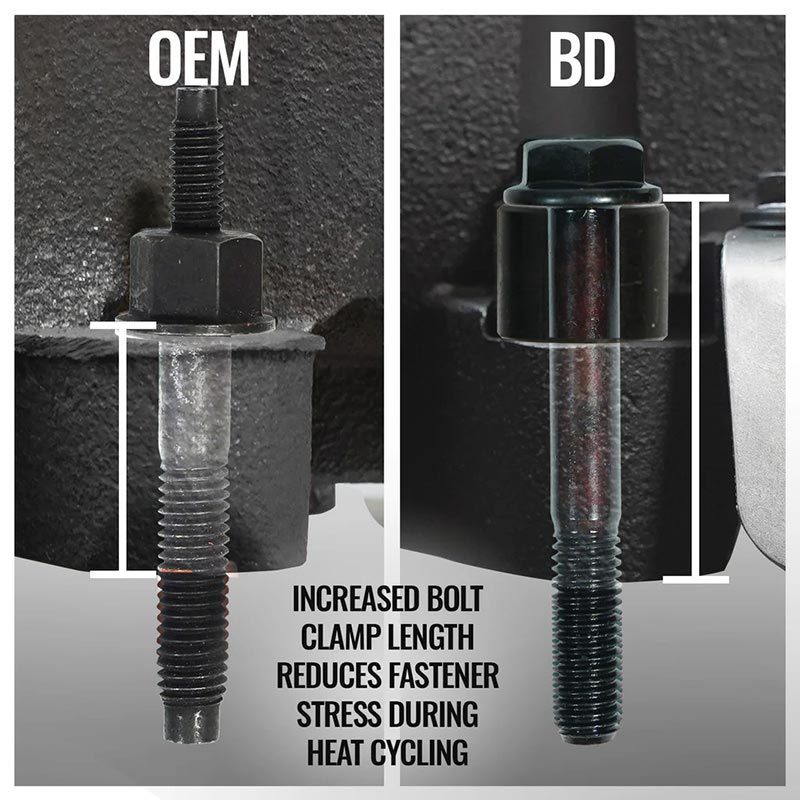
Some key features include:
- High-silicon ductile iron construction
- New mounting hardware included
- Direct-fit design
- Built for long-term durability
Whether you’re replacing broken exhaust manifold bolts or installing a new manifold after diagnosing a HEMI exhaust leak, upgrading while everything is apart can help reduce the chances of repeating the repair later.
aFe HEMI Exhaust Manifolds
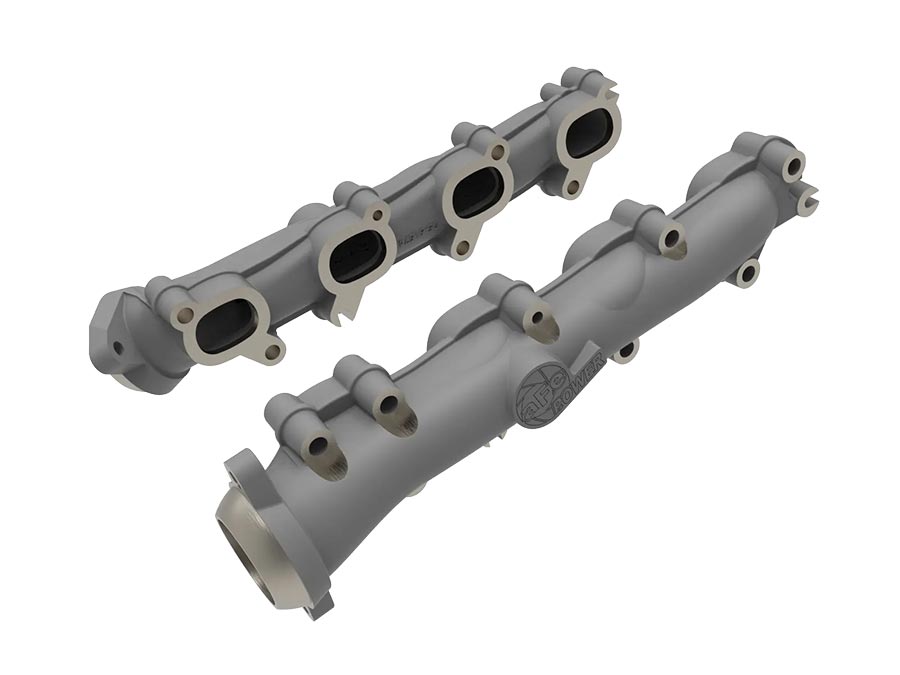
XDP also carries aFe BladeRunner exhaust manifolds for select 5.7L HEMI-powered Ram 1500 applications. These ductile iron manifolds provide another upgraded replacement option for owners dealing with cracked, warped, or leaking factory exhaust manifolds.
Fitment varies considerably between HEMI applications, so always verify the year, make, model, engine, and body style before ordering replacement manifolds.
Can You Drive With a HEMI Tick?
Whether you can keep driving depends on the cause. A minor exhaust leak may not stop the vehicle immediately, but it can become louder and make future repairs more complicated if additional hardware fails.
Ignoring a HEMI tick is a lot like ignoring that check engine light you’ve been pretending not to see. The vehicle may keep moving, but the repair bill rarely gets smaller.
If the noise comes from an internal engine issue, continued operation could cause more extensive damage. When in doubt, diagnose the problem before assuming it’s harmless.
FAQs
Is the HEMI tick normal?
Sometimes, but persistent or worsening ticking should be inspected.
Does the HEMI tick go away when warm?
It can. Exhaust leaks often get quieter as components expand with heat.
What causes a 5.7L HEMI tick?
Common causes include injector noise, exhaust manifold leaks, broken manifold bolts, valvetrain noise, and lifter-related concerns.
Can a HEMI tick be caused by a lifter?
Yes. Lifter-related problems can create ticking sounds that may be mistaken for exhaust leaks.
Final Thoughts
The HEMI tick can come from several sources, from normal injector noise to exhaust leaks or internal engine concerns. The key is identifying where the sound is coming from before choosing a repair path.
Whether you drive a diesel or gas powered vehicle, unusual noises should not be ignored. Strange sounds rarely disappear on their own.

Source
1 https://static.nhtsa.gov/odi/tsbs/2024/MC-10251862-9999.pdf