
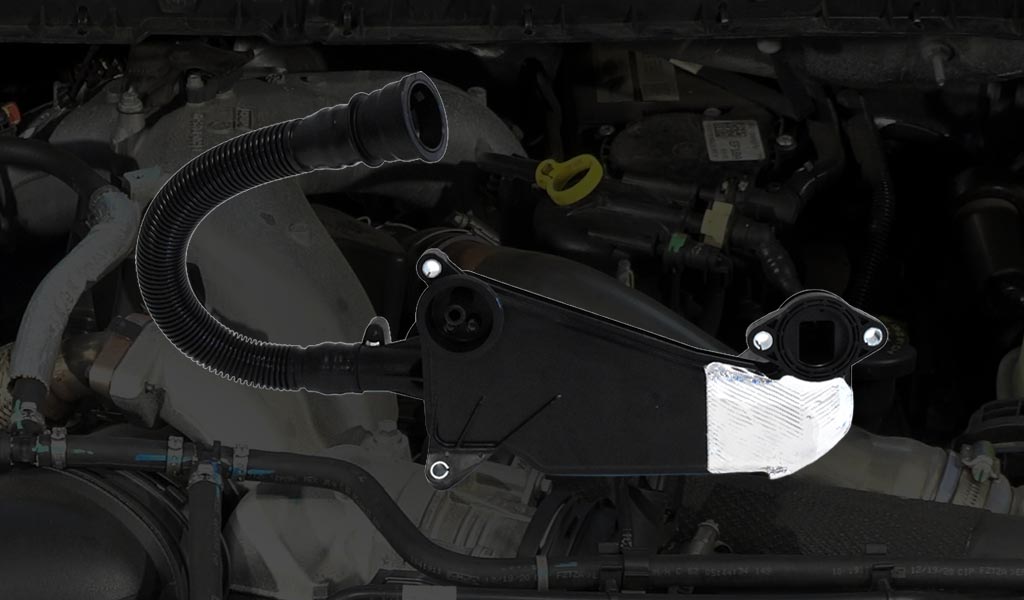
Since the 6.7L Powerstroke debuted in 2011, Ford has revised its Closed Crankcase Ventilation (CCV) system several times. We’re going to look at four of the main OEM CCV designs used throughout the life of the 6.7L Powerstroke.
At XDP, we’ve stocked multiple generations of Ford’s OEM CCV assemblies, which gives us a good look at how the system has changed throughout the life of the 6.7L Powerstroke.
So, what’s different from one generation to the next?
To find out, we dug into the history of Ford’s CCV system, compared the different assemblies, reviewed discussions from experienced Powerstroke owners and technicians, and took a closer look at independent teardown comparisons of the different designs.
Here’s what we found.
First Things First: What Does the CCV System Do?
Every diesel engine experiences a little blow-by. During combustion, some gases escape past the piston rings and enter the crankcase. Those gases create crankcase pressure and can carry oil mist with them. If the system isn’t properly vented, excessive crankcase pressure can contribute to oil leaks and other engine concerns.
That’s where the Closed Crankcase Ventilation (CCV) system comes in. The CCV assembly separates oil mist from those blow-by gases before routing the cleaned vapors back into the engine’s intake. The collected oil drains back into the crankcase while the vapors are routed back into the engine. It’s not the flashiest component on your truck, but it’s an important one.
Why Does the CCV Need Maintenance?
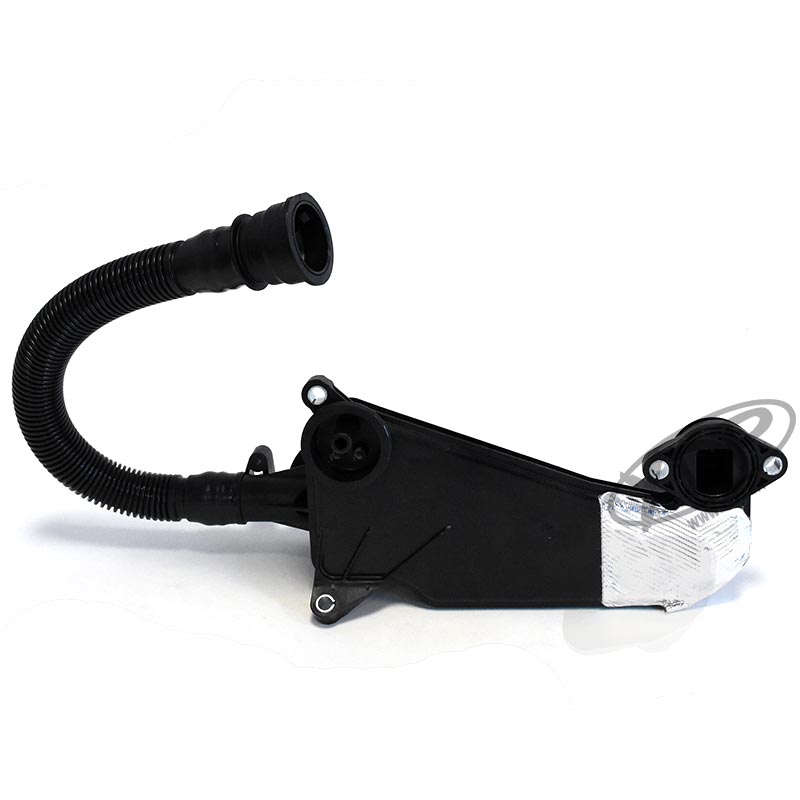
Like many engine components, the CCV system doesn’t last forever. Depending on the model year and application, Ford used both sealed CCV assemblies and versions with a replaceable crankcase vent (coalescer) filter element.
On versions equipped with a replaceable filter, the filter can become more restrictive as contaminants accumulate, reducing the CCV system’s ability to properly vent crankcase pressure. Other versions use a sealed, non-serviceable assembly rather than a replaceable filter.
As you’ll see below, that’s just one of the several changes Ford made to the CCV system over the different generations of the 6.7L Powerstroke.
Symptoms of a Restricted CCV Filter
Over time, the crankcase vent filter can collect enough contamination that it starts to restrict airflow. When that happens, the CCV system may not be able to relieve crankcase pressure as effectively as it should.
Ford has linked a restricted CCV filter to:
- High Crankcase Pressure6
- Increased Oil Consumption6
Of course, those symptoms can point to other problems too. But if the truck has the serviceable CCV filter, it’s definitely one of the places worth checking.
The Evolution of Ford’s 6.7L Powerstroke CCV Assembly
Since the 6.7L Powerstroke debuted in 2011, Ford has revised the CCV assembly several times. Each version performs the same basic function, but the design has evolved over the years as Ford refined the system.
And if the different Ford part numbers have ever made things a little confusing, you’re not alone. There’s some overlap between applications, so model year alone doesn’t always tell the whole story. Check the part number on the existing assembly and verify your truck’s specific application before ordering.
DC3Z-6A785 Series (Original Design)
- Model Years: Primarily 2011-2016 6.7L Super Duty Applications
- Design: Sealed, non-serviceable oil separator
- What Stands Out: Larger housing and the earliest of the CCV designs covered here
- Sensor: Certain 2014-2016 applications built on or before November 11, 2015 used a sensor at the CCV hose connection.5
- Current Part Number: DC3Z-6A785-C
The DC3Z-6A785 series dates back to the first 6.7L Powerstroke trucks and established the basic CCV arrangement used as the platform evolved. Inside, the assembly separates oil mist from crankcase gases before routing the vapors back into the intake.
Another unique feature found on some earlier applications was a sensor at the CCV hose connection. Ford used this setup on certain 2014-2016 trucks built on or before November 11, 2015.
FC3Z-6A785-F Series (Updated Sealed Design)
- Model Years: 2017-2019 Ford F250/F350/F450/F550 6.7L Powerstroke depending on application
- Design: Sealed, non-serviceable oil separator
- What Changed: Revised housing and internal oil-separation components
- Worth Noting: FC3Z-6A785-F was also used as Ford’s replacement for certain serviceable assemblies
The FC3Z-6A785-F is a sealed, non-serviceable CCV oil separator that is an update to an earlier CCV separator found on 17-19 trucks. The original Ford CCV housing contained a serviceable style filter, GC4Z-6A777-B, or Motorcraft FL-2077.
Because of the overlapping configurations, model year alone may not always identify which CCV setup a truck has. Vehicle configuration, build date, and a physical check of the existing assembly may be needed to confirm the correct replacement.
Earlier versions of the CCV assembly used a disconnect sensor on some applications to monitor whether the CCV hose had become disconnected. That sensor is not used with the latest design.
Serviceable CCV Filter Design
- Model Years: Certain 2017-2019 6.7L Powerstroke applications
- Design: Serviceable oil separator with a replaceable crankcase vent filter
- Filter Element: Ford OE GC4Z-6A777-B
- Replacement Filters: Motorcraft FL-2077 and Dorman 904-702
- Worth Noting: Certain serviceable-filter applications were later replaced with the sealed FC3Z-6A785-F assembly
The OE filter element is GC4Z-6A777-B, with replacement options including the Motorcraft FL-2077. As the filter accumulated contamination, it could become restrictive and contribute to increased crankcase pressure. Ford later replaced certain filter-style applications with the sealed FC3Z-6A785-F oil separator.
LC3Z-6A785-C Series (Refined Design)
- Model Years: 2019-2022 6.7L Powerstroke applications
- Design: Sealed, non-serviceable oil separator with a removeable access cover
- What Changed: Updated housing, internal baffle-style oil separation
- Sensor: The earlier hose-disconnect sensor is no longer part of this configuration
The LC3Z-6A785-C series marked another revision to Ford’s CCV oil separator design. Although the housing has a removable cover, the assembly does not contain a replaceable filter element. Instead, it uses internal baffling to separate oil mist from the crankcase gases before routing the gases back into the intake.
This design is generally associated with 2019-2022 6.7L Powerstroke applications, although exact fitment can vary by truck configuration and build date. Independent application references also describe LC3Z-6A785-C as a filter-less design with a removeable lid.
PC3Z-6A785-A Series (Latest Evolution)
- Model Years: 2023-2026 Ford F250/F350 6.7L Powerstroke
- Design: Compact, sealed, non-serviceable oil separator
- What Changed: Significantly revised housing and internal construction
- Sensor: Does not use that earlier hose-disconnect sensor
Introduced for the 2023 model year, the PC3Z-6A785-A represents the latest evolution of Ford’s OEM CCV assembly. While it performs the same basic function as previous generations, Ford made several notable changes to the housing and internal construction.
The PC3Z-6A785-A assembly uses a sealed, non-serviceable design, so the complete oil separator is replaced as an assembly rather than servicing an internal filter element. The housing is also noticeably more compact than earlier designs. Instead of replacing an internal filter element during maintenance, the entire assembly is replaced when it reaches the end of its service life.
Independent teardown comparisons by experienced Powerstroke technicians also reveal significant differences inside the PC3Z-6A785-A assembly compared with previous OEM versions. The internal construction shows that the changes extend beyond simply giving the CCV a new exterior housing.4
One interesting side note came up during our research. Ford catalogs the PC3Z-6A785-A for specific model-year applications. However, we’ve seen owners of earlier 6.7L Powerstroke trucks refer to the newer design as an upgrade. That’s an observation from feedback we came across, not a change to Ford’s published application information.
6.7L Powerstroke CCV Part Numbers by Year
| Year/Make/Model | Ford/OE Part # | Superseded Part # |
| 2011-2016 F-250/F-350/F-450/F-550 | DC3Z-6A785-C | BC3Z-6A785-A, BC3Z-6A785-B, BC3Z-6A785-C, BC3Z-6A785-EA, DC3Z-6A785-A, DC3Z-6A785-B, |
| 2015-2016 F-250/F-350/F-450/F-550 | FC3Z-6A785-C | FC3Z-6A785-A, FC3Z-6A785-B, |
| 2016 Ford F-250/F-350/F-450/F-550 | DC3Z-6A785-D | DC3Z-6A785-C |
| 2017-2019 Ford 6.7L Serviceable Filter Applications | GC4Z-6A777-B | GC4Z-6A785-B, GC4Z-6A785-C |
| 2017-2019 Ford F-250/F-350/F-450/F-550 | FC3Z-6A785-F | FC3Z-6A785-D, FC3Z-6A785-E |
| 2019-2022 Ford F-250/F-350/F-450/F-550 | LC3Z-6A785-C | LC3Z-6A785-B |
| 2023-2026 Ford F-250/F-350 | PC3Z-6A785-A | |
| 2023-2026 Ford F-350/F-450/F-550 Cab & Chassis | PC4Z-6A785-A |
Note: Ford revised and superseded several CCV oil separator part numbers throughout the life of the 6.7L Powerstroke. The current part numbers and model-year ranges shown above follow XDP’s product listings. Older part numbers are included to help identify original components that may still be installed on your truck.
A Quick Note About Model Years
The four CCV generations don’t divide perfectly into four clean model-year groups. Ford part numbers can overlap depending on the truck models, chassis configuration, build date, and later part supersessions. Ford’s own service information, for example, shows DC3Z and FC3Z applications overlapping during the 2016 model year.
So, while the model years above are useful for understanding when each generation appeared, the truck’s specific application should still be used to determine the correct replacement part.
Different Designs, One Job
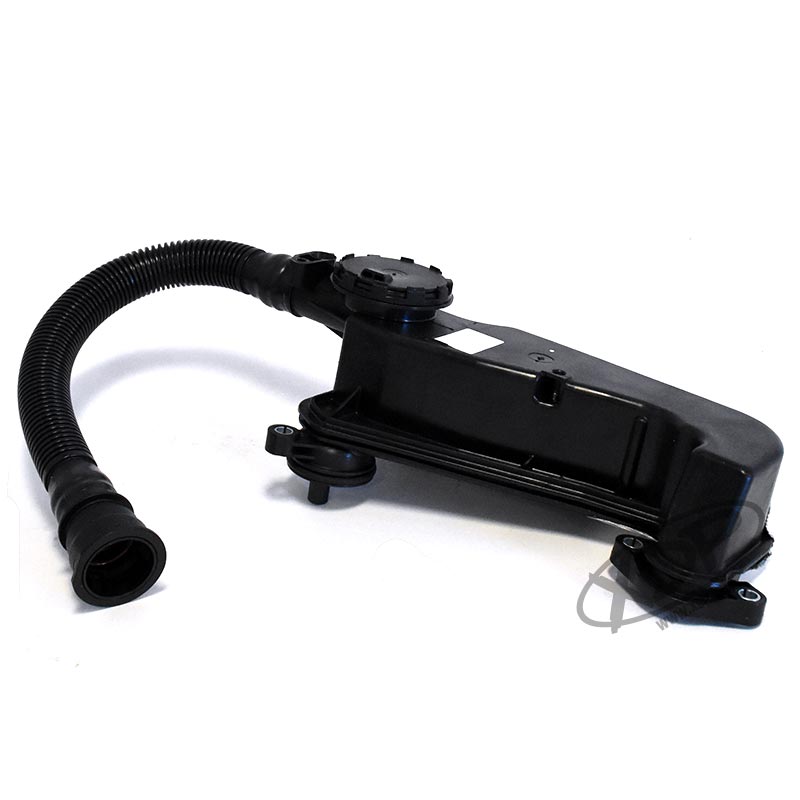
Despite the differences between the various designs, their basic job hasn’t changed: manage crankcase vapors, separate oil mist from blow-by gases, and help control crankcase pressure.
What has changed is how Ford accomplishes that job.
Over the years, the 6.7L Powerstroke CCV system has moved through different housing designs, internal configurations, serviceable and non-serviceable filter arrangements, and the addition and eventual removal of the CCV hose disconnect sensor on certain applications.
That’s also why identifying the CCV assembly used on a particular truck matters when it’s time for service. With multiple OEM designs used throughout the life of the 6.7L Powerstroke, the correct replacement parts and service requirements can vary by application.
Final Thoughts
The CCV system may not get the same attention as the turbocharger, fuel system, or other major components under the hood, but its evolution tells an interesting story.
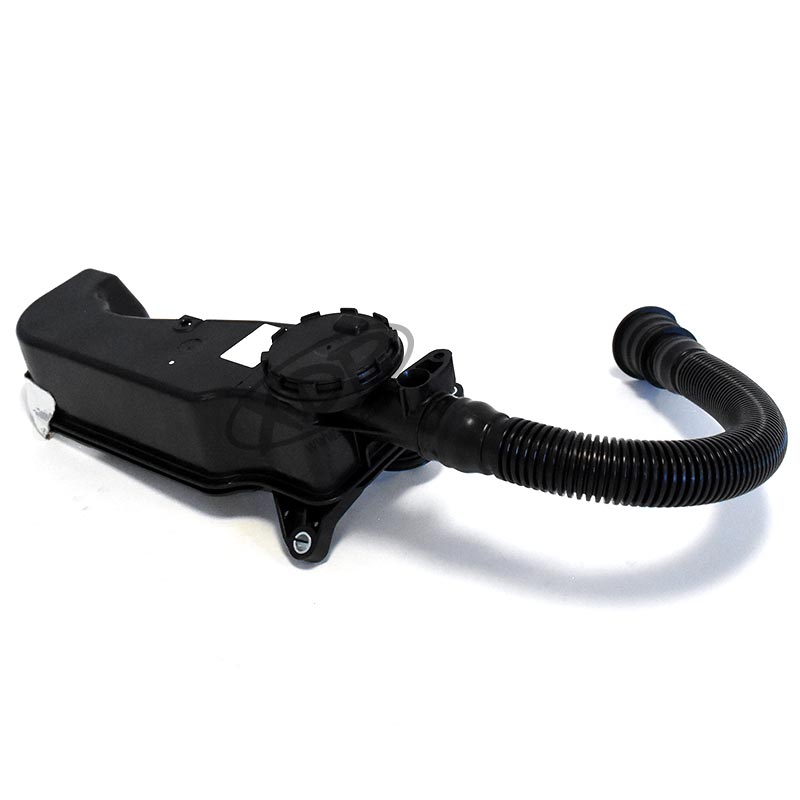
From the original DC3Z-6A785 design, Ford has made numerous changes to the 6.7L Powerstroke’s CCV system over the years. Some are easy to spot from the outside, while others become much clearer when the assemblies are compared internally.
Understanding those differences can make the different CCV designs, and all those part numbers, a little less confusing when it’s time to identify or service the CCV system on your truck.
Sources
1 https://www.fordtremor.com/threads/ccv-replacement-23-version-or-not.21883/
2 https://www.ford-trucks.com/forums/1598170-ccv-oil-separator-filter-change-interval-18.html
3 https://www.youtube.com/watch?v=TvxHQYGukbU
4 https://www.youtube.com/watch?v=AnuniilHO5I
5 https://static.nhtsa.gov/odi/tsbs/2021/MC-10191068-0001.pdf
6 https://static.nhtsa.gov/odi/tsbs/2019/MC-10160870-0001.pdf